Life Musings, News

Aurora and the War Within

I didn’t hear about the movie theater attack in Aurora until two days after it happened. I had been traveling – and, thankfully – am almost totally unplugged from the Media Industrial Complex.  I quit social media (Facebook) last December after having spent nearly 8 years living through the minutiae of everyday life as well as the mania spurred on by various “tragedies” with 600 of my best friends.

Of course my heart goes out to the families and loved ones of those who were hurt and killed in Aurora.   My heart also goes out to the approximately 80 people killed each day in the United States from gun related violence.  Beyond our borders, there are hundreds, if not thousands of others, who die from gun-inflicted wounds every single day in civilian and war-related killing.  To their numbers, we must add everyone else who experiences suffering from other types of violence every minute of every day.

I mention these countless other cases of suffering and violence not for the purpose of minimizing what happened in Aurora, but rather for the purpose of drawing attention to the arbitrariness of the hysteria that surrounds certain events.  When we take a step back, a familiar pattern emerges: (1) a certain case of violence somehow garners attention and 24/7 news coverage in the media (2) lots of everyday people, talking heads, politicians, intellectuals, religious leaders, etc. pontificate with great moral outrage about the ills of our society (3) touching memorials take place as people commemorate the victims (4) feelings of fear, dread, sadness, nihilism, anxiety and anger overcome the populace.

To the extent that such mass attention might raise consciousness about the costs of our current gun policies and the representations of violence and dehumanization that characterize so much of our popular culture, there is much good that can come from greater awareness of these issues.  And yet, there are many disturbing things about the obsessive attention and collective angst wrought by events like Aurora:

(1) The attention is always short lived.  It will reach its peak and then slowly dissipate.  At some point in the near future, no news outlet will report anything related to Aurora on any given day.  And, on the unknown future date, most people will not think about any of the victims.  In other words, life will return to “normal”.

(2) Many people who express moral outrage rarely use these occasions as an opportunity to put their principles into action in their own lives.  Instead, they have very detailed opinions about how other people should change without realizing that positive change concretely depends on how we all live our lives on an on-going basis.  That means that if I want a society that values the dignity of all living beings, then I need to take stock of the choices I make in my life in addition to calling my congresswo(man).

(3) The mass hysteria produced by media-driven coverage of tragic events is inherently arbitrary.  That is to say: the event(s) that come to occupy the collective conscious are always a mere subset of a much larger sample of horrific happenings.

So, what to make of Aurora?  Or the Trayvon Martin case?  Or the Giffords shooting?  Or any other tragedy that captures the public’s imagination?  I have a few ideas.

(1) No loss of life is more important than any other other simply because CNN says so.  There is nothing wrong with focusing on a tragic event if it spurs personal and collective action for the greater good.  But such attention must extend to the countless cases of suffering that never make it to the airwaves or the twittersphere.  In other words, we need to care about suffering broadly – not just in specific cases that seem to horrify or concern us.

(2) External violence derives from and pales in comparison to the “war within”.

Yes, reasonable people agree that our gun policies obviously need to be reformed and we should all do what we can to make decisions (political and otherwise) that reflect our esteem for human life and dignity.  That said, there is no amount of other-directed protest, pontificating or policing can solve the core issue at the heart of violence.  External suffering has internal sources.  We harm each other physically because of internal limitations on our capacity for love, compassion and peaceful co-existence.  I have sometimes remarked that people who decry violence need to ask themselves how realistic it is to expect people to treat others with respect and compassion when most people do not even love themselves!  If you pay attention to your inner world (your thoughts, feelings and perceptions) on a daily basis, you will quickly learn how difficult it can be to maintain an attitude of love and compassion not only toward other people, but also toward yourself.  Difficult circumstances and situations frequently arouse feelings of anger and fear for all of us on a daily basis.  Learning how to achieve inner peace and happiness is the only way we can individually become agents of compassion, cooperation and love in our interactions with others.  The war within needs our urgent attention, even as we take steps to address the war in our streets.

(3) Social media and mass media interfere with our ability to maintain equanimity and inner peace.  Being informed about local, national and global events is important.  I am not advocating burying our heads in the sand.  But being continuously plugged into the Media Industrial Complex with its assortment of arbitrary news coverage, commercialized interests and biased representations is a recipe for moral decline, passivity and cultural manipulation.  I was so grateful that I did not get wrapped up in the hype about Aurora on Facebook (since I no longer have an account) or through cable news (since I rarely watch it).  Yes, I found out a few days after the fact and did follow the story with some interest, but because I came to the story rather than having it come to me, I was able to examine it from a place of calm reflection rather than media-manipulated fear and loathing.

(4) The most important thing any of us can do in response to such tragedies is to ask: How am I living?  Before I prioritized my spiritual life, I found myself attracted to execrable popular culture like reality TV, violent action films and generally mindless material.  Since the dawn of my spiritual “awakening” (for lack of a better word), I naturally found myself mostly reading about theology and philosophy and watching related media (i.e. Eckhart Tolle’s talks or Mooji’s videos) in my free time.  I didn’t consciously try to avoid violent material, but I simply lost interest in it.  There are some exceptions — I still love the “Matrix” films and have a slight addiction to Breaking Bad, but I try to watch these things consciously, in a way that strengthens – rather than weakens – my concern for the dignity of all living beings.  Perhaps more on that in another post.  All of this to say, change is possible and it begins with you.

I’m not saying that we shouldn’t watch movies like the “Dark Knight Rises”  – I don’t think external responses of that nature are the “answer”.  To go on a “violent movie” boycott or to only militate for greater gun control (though we do need it) would be naive and shortsighted.  Tragic events like Aurora remind me to pay attention to what’s going on in my world – in my thoughts and emotions.  It heightens awareness of emotional and mental violence.  The moment I feel myself thinking negatively about someone, I am reminded that such enmity – no matter how minor – is the seed from which all mistreatment and violence grows.  How can I expect others to be more compassionate if I myself do not prioritize compassion and kindness?  When I feel “pissed off or upset about anything, I use awareness of those emotions to bring me back into conscious recognition of my Self as the Presence of God rather than my “self” as the ego with its tote bag of delusions, petty interests and conditioning.  This is why meditation and other practices that focus our attention on the present moment – on stillness – are so important.   It is only from a place a inner peace and tranquility that we can come to regard each other with the respect, love and dignity that make external violence inconceivable.

What do you think?  Is it possible to consume violent culture while also affirming the dignity of human life?  Is there any real good that will come from the intense attention to the Aurora shooting?  What can each of us do, individually and collectively, to respond to this event?

Life Musings, Spiritual Musings, Unexplained Phenomena

Buddha, Buddha, Everywhere

People in my life know that I make a big deal out of pleasant coincidences.  I generally refer to these auspicious confluence of events as synchronicities.

I started noticing synchronicities a few years ago.  For a while, I’d keep track of them in my journals.  Then, there were so many that I simply could not keep track of them.

For a while, I tried to figure out why these cool and interesting things were happening.  I noticed some patterns.  My synchronicities:

– did not seem to concern terribly important things (i.e. life and death situations, huge decisions or existential issues)

– were generally pleasant and delightful

– made me happy

– seemed to happen in “batches”

Years ago, I gave up trying to figure out why they happen.  I did read Carl Jung’s work on synchronicities with some interest, though I did not delve deeply into the psychoanalytic framework he uses.  These days, I interpret cool coincidences as evidence that (1) I’m in the right place at the right time (2) the Universe/God/Angels/Beings of Light/Oprah were essentially reminding me that we live in a magical, matrix-like world (3) God loves me and has a sense of humor.

In any case, my recent trip to New England was full of cool synchronicities.  The most noticeable coincidence was the plethora of Buddhas that seemed to follow my every step.  When I arrived at my mom’s place in Portland, Maine, I noticed her collection of Buddha statues and took a few pictures.  I had seen them before, but I felt some need to document them this time.

A few days later, I showed up at a friend’s place in Cambridge only to find a tiny Buddha statue on the bed in which I’d be sleeping.  Again, I snapped a picture.

While walking in Harvard Square, I randomly bumped into a friend I hadn’t spoken with in years.  That night, I swung by his apartment.  At some point, I noticed a Buddha statue in one of the rooms.  I was delighted, though not surprised, despite my friend being allergic to most things spiritual.   He then proceeded to point out the half a dozen other Buddhas in his living room.  An interesting conversation about the meaning of life, his interests in nature and my interests in Buddhism and especially Hinduism commenced.

Other coincidences during the trip (some less impressive than others):

(1) While driving through Cambridge, I felt compelled to stop by the Weeks Bridge, a beautiful pedestrian walkway that arches over the Charles River.  The bridge overlooks my old place at Peabody Terrace, where I lived for 5 years as a graduate student at Harvard.  I walked up the washed-out white steps of the bridge, beheld the water and entered into meditation while listening to the recording of my “Harvest Moon” cover (a song I’d become obsessed with).  While on the bridge, I decided I wanted to grab a coffee.  My heart led me to Petsi Pies, a cool cafe and bakery I used to frequent.  At Petsi Pies, I ordered a mocha latte, still listening to my music.  Then, I watched as they took down the morning menu and put up a chalk board for lunch.  I blinked when I saw that the special of the day was the “Harvest Moon” sandwich.  I’d never seen that there before, and they told me they didn’t have that special the previous day.

(2) Walking through the Cambridge Commons, a little park on Harvard’s campus, I noticed a couple walk past me.  The woman was wearing a bright green summer dress with a striking gold necklace.  Her hipster male friend had on a matching green t-shirt.   About 55 minutes later, I walked back through the Commons to my car, and the same couple walked past me, in almost the exact same spot where we crossed paths an hour before.

(3) The Buddhas.  The Buddhas!

(4) A lot of synchronicities seem to involve my bed. Staying in my friend Miriam’s home, I noticed that there was a TV box next to the bed where I would be sleeping.  It said, in big letters: “BLACK CRYSTAL”. Okay, this one is a stretch, but it still made me smile.

(5) In my mother’s guestroom, I turned and saw a stack of books on the bedside table.  One of the books said “Advaita” on its spine.  I knew it was meant to be my book.

(6) At my friend’s Cambridge apartment, there was a Buddha on the bed in which I slept.

(7) Lying in bed at my friend’s place in Boston, I woke up to see a book on “Chi Running” on the floor nearby.  The book explains a technique for running long distances without hurting one’s self — the subject of an extended conversation I had with someone about a week ago.

(8) Conversations with various people I did not know I would talk with revealed synchronistic interests, reflections and experiences that are too numerous to get into here . . .

Uncategorized

New England

Some snapshots from my trip to Massachusetts and Maine.  One odd, but cool thing: of the five homes where I was welcomed by friends and family, three of them featured little Buddha statues — and none of these people are Buddhists. One of the Buddhas, at my friend Patrick’s apartment, was actually a relic that dates to 700 A.D.!

This slideshow requires JavaScript.

Uncategorized

Conversations With 5 Year Olds

20120720-151902.jpg

Snippets from Avi and Noah, referred to here as “FYO” (five year old):

* * *

FYO: “Hey, you see this television? It used to be in here.” (FYO points to a cardboard box. I notice that the box, synchronistically, says “Black Crystal” in its product description.)

Me: “This is pretty cool. You see this says “Crystal”. That’s my name. And it says “Black Crystal”, which is even more awesome, because I’m Black. I am a Black Crystal!”

FYO: (pause) “Actually . . . I think you’re brown?” He raises his eyebrow and shrugs.

Me: “Yes, this is true–”

FYO: “But, there are people who are actually black.” I furrow my brow, wondering what he means by that, but I let it slide.

Me: “What about you?” I take his tiny hand. “I can’t tell what color you are. Maybe peach?”

FYO: “Actually, I’m Jewish.”

Me: “Jewish isn’t a color.”

FYO: “I know.”

* * *

FYO: “Show me your breasts!”

Me: “No.”

(a few minutes later)

FYO: “Your breath smells really bad!”

Me: “I know. I have dragon breath.”

* * *

Me: “This is magic.” (referring to my iPad)

FYO: “You are magic!”

* * *

Me: Throw me a cracker.

(FYO throws cracker. Cracker falls on the ground.)

FYO: “Maybe that wasn’t a good idea.”

* * *

FYO: “I don’t want people to see me like this!!” (said to his mother at the beach when she pulled off his pants so he could change into his swim trunks)

* * *

Me: “Look at the ducks. Aren’t they cute? The ducks are like your brothers. Be nice to them. Love them.”

FYO: “Yeah they are cute, but I don’t have that many brothers.”

Life Musings

Maybe Babies

Over the past week, I’ve had the pleasure of getting to know Avi and Noah, the precocious, highly intelligent, charming, bilingual (soon tri-lingual) and generally adorable sons of my friend Miriam. I am so impressed with Miriam’s indefatigable, disciplined, joyous, organized, practical and upbeat approach to parenting. When I’m not horrified by in awe of the constant attention, care, thoughtfulness, wisdom, energy, playfulness and outpouring of love required to parent 5 year old twin boys, she almost makes me want to be a mother. Almost. (Though, “friend-of-other-people-with-kids” might work out just fine for me, too . . .)

Miriam

Hanging out with Miriam and her sons was an unexpected addition to my New England roadtrip. I’d met her a few times over the years because of my friendship with her parents, but we had never had an in-depth conversation. This time, she happened to be at her parents’ home the day I arrived in Massachusetts, and for reasons unknown, we suddenly clicked. We found out that we both had been making music using Garageband and shared interests in foreign languages as well as some similar health challenges and strategies for healing. We stayed up into the wee hours of the morning discussing all manner of minutiae. We took a long walk on a nature trail where she pointed out the various plants and flowers that were edible. I found myself eating clovers (and loving it) and nibbling on tiny pink raspberries like a bird. I’d never done anything quite like this before, but thoroughly enjoyed every minute.

Miriam’s kids are pretty incredible. They flow effortlessly in and out of Spanish and English and have such alert minds that they also attentively watch movies in other languages that they don’t understand. For years, when I would see them in passing, I never heard Avi and Noah speak English (their mother and their grandparents address them almost exclusively in Spanish). Their mastery of Spanish is all the more impressive given that they have no Hispanic ethnic background in their family. It’s also really lovely that they can speak Spanish because they live in an extremely diverse neighborhood where over 50% of the children are Hispanic.

Noah and Avi were shy when I showed up in their grandparents’ kitchen a few days ago. I’m sure they noticed that I didn’t respond to whatever they were saying in Spanish and wondered what was wrong with me. When their mother explained that I speak English, they instantly “got it” even if they remained a bit suspicious of me. They would continue their on-going Spanish conversations with each other and their family, but they would generously slip into English when they wanted to tell me something. Their mother, who speaks at least four languages, would also sweetly translate bits of Spanish into French for me.

After the boys established that I was a nice person and cool enough to be included in their 5 year old inner circle, they started to really show off their various skills, inventive ideas, pranks and funny observations. I noticed some slight differences in personality between the two. They are both full of energy, playful, bright, creative and full of love. Noah seems a bit more pensive and analytical. He likes to build things (this morning he showed me a device he made to hunt for dinosaurs) and he often begins his English sentences with “Well, *actually* . . .” Noah is also very good at teaching things yet also humble about what he does not know (something all of us in academia should learn from). When I asked him to teach me something in Hebrew, he showed me how to write his name. Yet when I asked if he could read from the Hebrew dinosaur book he brought me, he immediately said “I don’t know how”, matter of factly, without an ounce of self consciousness. I loved it.

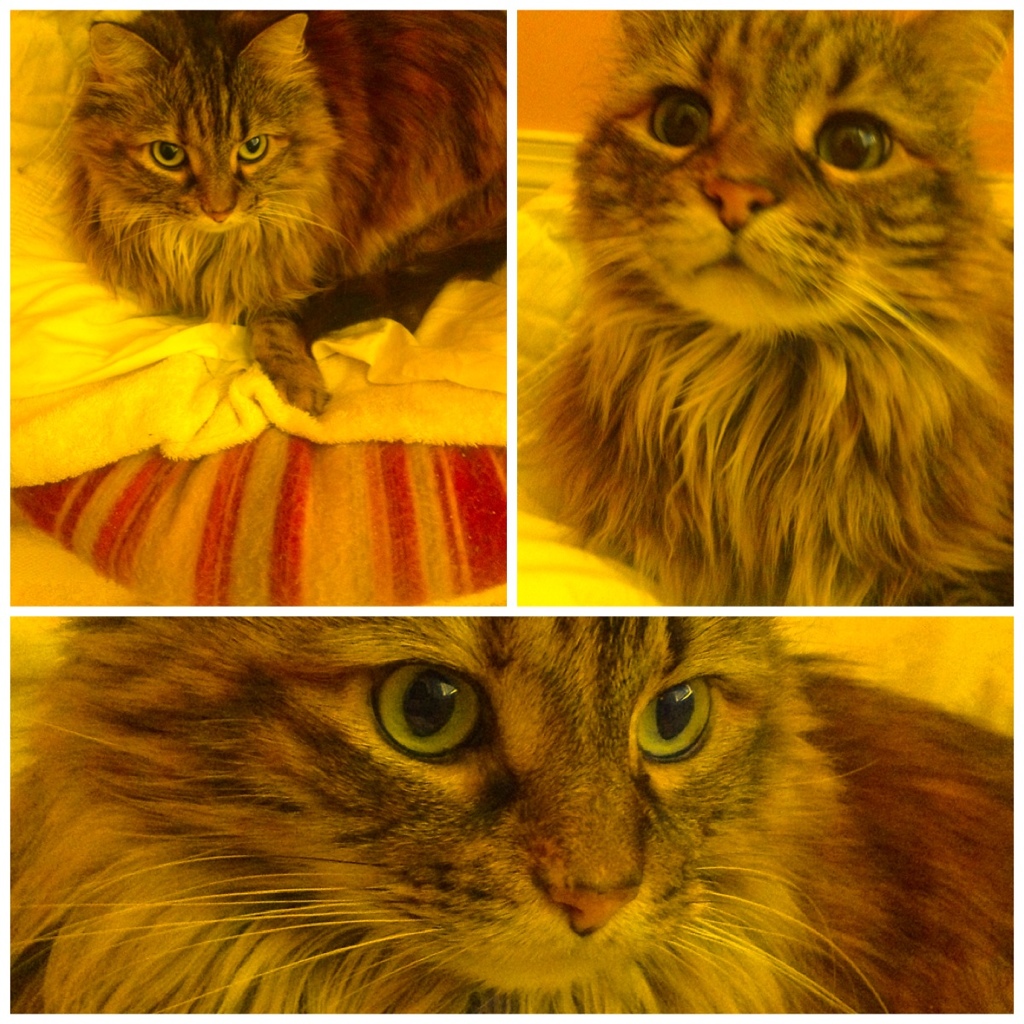
Avi seems to be more active, perhaps a bit more emotional and demanding than Noah. Avi knows what he wants and asks for it. He is very attentive and let’s nothing get past him. When I pointed to a picture and said the word for “truck” in Spanish, he shook his head and said – in English – with thinly veiled pity, “No, that’s a car.” Avi also very clearly loves me, which is remarkable given that he attacked my leg viciously with a fly swatter when we first met. I kind of knew there must be some affection underneath his playful predator-mode (a kind of behavior I instantly recognized from the crazy, yet well-meaning “attacks” my cat Zora sometimes directs my way). After I picked him up, turned him upside down and spun him around a few times, his little heart melted and he decided to be my friend.

Hanging out with kids is very novel for me. I was surprised at how much I enjoyed their company during this trip. We went swimming at sunset at a gorgeous lake and ruthlessly disturbed a family of ducks. I became a human launching pad for the boys, throwing them several feet into the air and catching them in the water. I taught them a few words in French. We made art on my iPad. (When Noah first touched the purple oil drawing tool on the screen, he checked his finger to see if the paint had gotten on it.) Avi bit my leg, then hugged it like a tree trunk and counted my toes. Noah showed me their “secret hiding place” next to the television (some kind of structure made of chair, a basket and a yoga ball). I watched with interest and mild concern as Noah vigorously attacked his brother with a fly swatter (apparently with Avi’s consent). At one point, Avi asked his brother “Can I do it now?! Can I do it now!?” – meaning “Will you please grant me permission to beat you down?” Noah agreed, which led to Avi hitting him twice as hard as Noah hit him. Before I could intervene, Noah ran off to his mother, crying. I’m sure he was a bit hurt but he was also embarrassed.

I went over to Noah and picked him up, which only made him cry harder. “No!” he whimpered, pitifully. I panicked for a moment, then I squinched his face (yes I know squinched is not a word, but somehow it naturally emerges from interacting with a child) and said “Hey! Wanna see something?” He got quiet for a moment, tears still streaming down his face. Somehow, I accessed a long dormant memory of a game my mom would play with me. Magically, my hand transformed into a creepy crawly creature which makes funny noises and tries to pinch your nose. Noah loved it, burst into laughter and smiled brighter than the sun. Then Avi came running, begging me to pinch his nose with the hand monster.

I am an only child and grew up far away from my cousins, so babysitting was something I did quite rarely. It has only been in the last year or so that I noticed myself appreciating children. Last Christmas, I spent the day volunteering at a soup kitchen run by my friend Betty. One of the homeless women brought her newborn son – an extraordinarily beautiful lump of golden perfection whose singular presence filled me with love. As I’ve gone back to the soup kitchen almost every month since December, I’ve seen this little lump get bigger and even more beautiful. Last month, my soup kitchen duties included holding him so his mother could eat and enjoy her meal. I noticed, with pleasure, how natural and lovely it was to cradle him on my shoulder. In the past, holding babies was always so awkward for me. But, for whatever reasons, something clicked this time and I knew what to do without anyone telling me. The Golden One was also obviously very comfortable – no crying or complaining as he gazed lovingly into my eyes. I was so enchanted that I didn’t even care when he threw up all over me. Three times.

Holding this little person, I wanted very much to communicate a few things to him and I somehow had the conviction that he could understand. So, I told the Golden One that he was a manifestation of God, that he was really smart and beautiful and that all good things were possible. He just started at me, blinking and smiling, which I took as 100% confirmation that he “got it”.

I do not know if a “mothering instinct” is presenting itself, but the idea of reproducing is becoming slightly more attractive. In the past, I thought of having children as something I might do one day after finishing graduate school and probably after getting tenure. I had fantasized about motherhood – especially when I was in love – but could not, for various reasons, seriously imagine myself having kids with any of my ex partners. For a while, I thought of reproduction as something people do for egoic reasons (i.e. “I want a little version of myself” or “I want to make a little person with this individual I love because my ego feels the need to extend itself and its attachments”). In this jaded, naive state of mind, I found myself mocking parenthood.

As I began to move beyond my attachment to not wanting attachments, I opened up to the miracle of Life as it emerges in the present moment. I saw that feelings (i.e. wanting or not wanting kids) can and often do change. I also saw very clearly that I, personally, could want to have children with the right man. I began to get a better idea of the kind of character, wisdom, personality, thoughtfulness, capacity for love and emotional maturity that would make a man an attractive partner and father in my eyes.

I still feel that parenting is something that I can take or leave — it is not Something I Must Do to Make My Life Complete. If I don’t have kids, at least I can delight in the presence of Other People’s Kids (and then go home to the freedom of my childless life). But as time goes by, I’m beginning to feel that children are probably in my future. Let us hope that an excellent partner, nanny, proximate grandparents willing to babysit, a child-friendly lifestyle and bottomless wells of patience are all in my future, too.

20120720-132155.jpg

20120720-151955.jpg

20120720-152804.jpg

Race & Ethnicity, Spiritual Musings

On Stillness & Stereotypes

One of the advantages of living in awareness of the present moment is that you begin to consciously experience what it means to live beyond stereotypes

I recall hearing Eckhart Tolle talk about this aspect of stillness in one of his videos on EckhartTolleTV.com  The basic idea, as he explained it, is that being aware of other people as living beings requires attuning to their energy in the present moment.  It is in this way that we can connect with each other more fully rather than relying on expectations, prejudices and stereotypes derived from our conditioning and socialization.

In my research, I spend a lot of time thinking about the consequences of ethnic and racial stereotypes on inter-group relations.  Much of my work concerns the way minorities interpret and respond to everyday racism and discrimination.  In my own life, I have also been surprised and disturbed by how difficult it can be to not be influenced by the lingering (negative and positive) preconceived ideas we have about each other.  Usually these expectations are formed on the basis of appearance.  I know all of this intellectually – and yet – even as a scholar concerned with race and antiracism, even as a person of color, even as someone who asserts solidarity with the LGBT community, even as a woman, even as a “spiritual enthusiast” with a universalist/nondual perspective — even I have had to confront the persistent and pernicious effects of stereotypes on my perception of others.

If I have found it difficult to “live beyond” stereotypes, then how much more difficult must it be for people who share no particular affinity for universalism, who are not directly concerned with discrimination or who have not had the good fortune of having friends and loved ones in diverse communities and cultures?

One of the most profound changes I’ve experienced as I’ve prioritized my spiritual life has been truly connecting with other people – not on the basis of my assumptions about them or my past experiences – but rather on the basis of the energy that arises in the immediacy of our interaction.  As I began to put some of Tolle’s teachings into action, I noticed a remarkable flowering of my social life.  I now find it so easy and natural to engage with others when I’m anchored in stillness.  Instead of seeing folks through the lens of my expectations, they appear to me as they really are: awe-inspiring, beautiful manifestations of the Divine.

Now, when I encounter anyone – I find myself more automatically and easily feeling their aliveness.  When and if stereotypes emerge in my mind, I notice them and use that awareness to draw me back into Presence.  In the immediacy of the present moment, stereotypes and expectations simply burn away . . . how could they persist in the light of the “now”?  As I more naturally connect with and sense others, I increasingly have breathtakingly beautiful experiences, exchanges and encounters with such a wide variety of human beings . . . all of which has made my life even more rich, inspiring and exciting than it already was.

Stereotypes deaden our relationships.  They prevent us from seeing and connecting with what is real and essential about all of us.   For me, it is not enough to simply acknowledge, intellectually, that prejudice and discrimination are “bad”.   You can’t overcome the influence of conditioning and socialization through “good will” alone.  What is really required is a conscious realization of who we really are – beyond identity, beyond the ego, and certainly beyond stereotypes.  In the context of this understanding and inner knowing, connecting with others becomes natural and easy..not the result of effort.  It’s the same process by which virtuous and “right” action naturally flows from “right” perception.  When  you know who you really are and you know who God really is, you don’t try to act like a good person, but goodness can simply flow through you like light shining through a transparent vessel.  This is, of course, so much easier when we get our egos and past conditioning out of the way . . . in fact, getting over ourselves and living more fully in the present moment are both prerequisites for deeply experiencing love, peace and joy in our relationships with others.  It’s in this way that we come to truly see that there are never really any “others” out there. There is only the Self, the oneness of God . . . and we are all made of, by and in It.

Food

Lazy Gourmet: Spicy Spinach Ravioli

Fresh ravioli with prosciutto, spinach & gorgonzola in a light butter sauce

Cooking time: 20 minutes

1. Bring 2 quarts of water to a boil

2. Add fresh ravioli and bring to boil again until done

3. Drizzle EVOO in a saucepan with minced garlic

4. Drop two handfuls of fresh baby spinach into saucepan, along with two pinches of salt. Cook until wilted (about 2 minutes) and remove from heat

5. Drain ravioli. Add pasta to a saucepan (cooking on low heat) with spinach, two tablespoons of butter, 1/2 cup of tomato sauce.  Sprinkle with gorgonzola, prosciutto, pepper and spices to taste

6. Devour.