Life Musings

Self Care

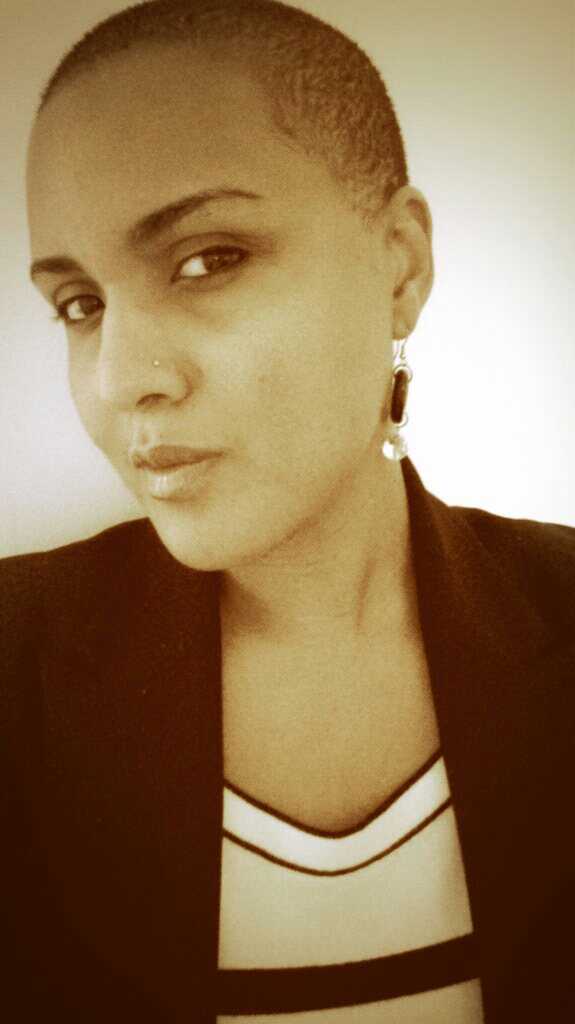
This, after a long day of teaching, writing and errands.

20140422-224508.jpg

I managed to get in 8 hours of rest, started my day with meditation, a smoothie (peach, superfood greens and chia) and Mooji. Met my minimum daily writing goal (30 minutes), picked up groceries, did the laundry, made delicious tapas for dinner and prepped for a talk I’m giving tomorrow. Grateful for my TAs, whose dedication and competence allow me manage my time effectively. Thanks to their help and collaboration, I was able to make progress on my research between teaching and office hours — a monumental feat.

There were things I didn’t cross off my to do list. Many things. But the day is done. Sleep, now. Merciful sleep.

Academic Musings, Life Musings

3 Lessons We Can Learn from Overcommitment

MeThis semester, I’m learning quite a lot about over-commitment. Over the past month or so, I gave three talks across the country while trying to find time to teach, run the Race, Ethnicity and Inequality workshop at SBU, mentor undergrads and graduate students, fulfill treasurer duties for SREM, handle service obligations, write peer reviews and make progress on several papers and the book project. Oh, and then there’s also the writing group I’m part of, and, gosh, everything else. Finances. Self-care. Family. Social life. Romance. Unexpected crises. SLEEP. Or rather, insomnia. I got very, very little sleep during the entire months of February and March. When I started feeling the ill effects on my health, I realized it was time to take a step back and recommit to my well-being.

Continue reading “3 Lessons We Can Learn from Overcommitment”

Life Musings, Spiritual Musings

No Knight in Shining Armor

If you’ve followed this blog since the beginning, then you’ll know that I used to have quite a thing for knights in shining armor.  I often found myself falling for people – especially men – who could swoop in and take care of all my little problems.  Exhibit A can still be found here, even though I’ve fought the urge to delete this post and thereby remove all evidence of past codependent tendencies.

Therapy, introspection, and a fantastic book on overcoming abandonment issues helped me uncover the roots of my attraction to men who could fix my life — deal with car stuff, lift heavy objects, make phone calls I didn’t want to make and generally do things I was too lazy, insecure or spoiled-brattish to do myself. Continue reading “No Knight in Shining Armor”

Life Musings

My First Non-Fucked Up Partnered Valentines

In the past, most of my Valentines days have pretty much been disasters. The worst Valentines were actually the ones when I found myself in a relationship. For one reason or another, our best laid plans always turned out to a be a bust. Expectations were unfulfilled. Hopes were dashed. Drama ensued. More often than not, my then-lovers and I would end the day in passive-aggressive anger rather than the throes of passion.

The best V-days for me have been the ones I’ve spent alone.. focusing on self-care, meditating, sipping on champagne, getting my nails done and sobbing uncontrollably while watching old epis of Grey’s Anatomy.  So it was not without some trepidation that I noted February 14th fast a-coming, and wondered if this might be my first-ever boo’ed up Valentines that was not an epic fail.

“Your job,” I joked with my girlfriend recently, “is to not fuck up Valentines.” If we just made it through the day without any cray, we’d be making history. From prior experience, I’d learned that projection-fueled expectations were the enemy of intimacy.  We talked at length about how we each experienced disappointment in Valentines past, and how we thought we’d avoid such scenarios this time around.  Part of our approach was making light of the whole thing.  Valentines? Whatevs!  We were too evolved, too emotionally mature to buy into an arbitrary, commercialized holiday. Continue reading “My First Non-Fucked Up Partnered Valentines”

Academic Musings, Life Musings, Spiritual Musings

My News

Last fall, I participated in the unbelievably fantastic Faculty Success Program, organized by the National Center for Faculty Development and Diversity. FSP was developed by Dr. Kerry-Ann Rockquemore, a brilliant sociologist who quit her tenured job to commit herself full-time to the NCFDD and, in so doing, provide life-changing tools to harried professors seeking to improve their productivity and work/life balance. While the center works to support academics of all stripes, its resources and programs are particularly useful to first generation academics, women and people of color — all of whom are often excluded from informal networks and know-how that are crucial for thriving in academia.

A friend of mine participated last year and told me that FSP changed her life.  She felt more productive, linked into to professional networks and focused on her research and writing goals.  On the basis of her testimonial – as well as the experiences of other colleagues I know and respect – I wrote a grant to fund my participation in their semester-long “bootcamp” for academics.  I knew I would not be teaching in the fall and was hopeful that the program’s structure, systems of accountability and professional development tools would help me make the most of my “time off”.  Continue reading “My News”

Academic Musings, Life Musings

On Being Openly Bisexual in Academia

2013-11-21 11.10.55

The first time I came out to my undergrads was during a unit on the sociological concept of “stigma” in one of my theory courses. In discussing Goffman’s understanding of stigma as a “discrediting” attribute, I told the story of how my 90 year old godmother responded when I told her I date men and women.  “I’m so, so sorry to hear that,” she replied, as though I’d been diagnosed with the plague.

When I finished my lecture, a student came to the front of the classroom and expressed gratitude for my coming out story. I thanked her for reaching out and asked why she was moved. “Well, we look up to teachers,” she said, “and it’s really important for people in positions of authority to help reduce the stigma.”

People in positions of authority.  I let the phrase float in the ether of my mind.  Did my being in a “position of authority” mean that I had a duty to come out?  I didn’t think so.  And, I didn’t see my being honest and authentic about my experience as a conscious effort to reduce stigma. Including the story about my godmother’s disappointment was an effort to demonstrate how many of us are stigmatized by loved ones because of our sexuality.  But this student’s simple declaration of gratitude helped me understand the impact of owning our personal identities in our professional lives.

Part of my pedagogy is to teach students to connect sociological theorists with concrete lived experiences — both their own as well as the biographical details of the intellectuals themselves.  No doubt, this perspective was shaped by my work with sociologists of ideas during my graduate studies at Harvard.  But a commitment to uniting the personal with the professional, the intellectual with the existential mostly derives from the pivotal influence of black feminist scholars who have given me the courage to draw on intersectional and post-intersectional frameworks to produce theory from the fabric of my queer, black, working-class-born, middle-class-bred, single-mother-raised, particular and peculiar existence.

Coming out as bisexual in academia has been a long process for me. When I fell in love with a woman in my early twenties, I found myself surrounded by fellow graduate students and colleagues at an academic conference.  I wanted to sing about my new love from the rooftops.  And yet, when we were together, I was too paranoid to hold her hand as we walked across campus.  Insecure about my sexuality and lacking a queer support network, I danced in and out of the closet, at turns brave, uncomfortable, liberated and ashamed.

As a woman who mostly partnered with men, many (though not all) colleagues and students assumed I was straight. Sharing my bisexuality was something I would only do on occasion — haphazardly. Over the years, I began to realize how much I benefited from heterosexual privilege in the profession — and it disturbed my spirit.   When, in my 30s, I found myself single for the first time in many years — and dating women again — I saw clearly that being open about my sexuality was the only healthy option for my well-being.

There was just one little problem: I didn’t have any bisexual role models within academia.  Not a one.  While I knew of many openly gay and lesbian professors, I personally could not name a living, breathing, bisexual academic in my social network. Bisexual profs may be legion, but I’d personally never met a colleague who publicly proclaimed the label.  And to be fair, I didn’t exactly search high and dry. If I attended conferences dedicated to sexuality or joined more groups for LGBT sociologists, I’m sure I would have met more bisexual colleagues.  But the other part of the story is that “bisexual” may not be a particularly popular label for non-straight-identifying folk to claim. Some decry what they see as the “sexual binary” inherent in the term and prefer to see themselves as “queer”. The bottom line is that I looked around and found myself on a bisexual academic island. What’s a Ph.D.-having-bi-woman-of-color to do?

Eventually, I put on my big girl panties.  Of course I would have to be the change I wished to see. I only wanted to date women who were open about their sexuality, in their private and public lives – so I knew I had to embody those same values.  I was already out to close family and friends, including some other academics, but I still allowed most folks to impose an assumed heterosexuality. And so I began by recognizing that I wanted to kick my “openness” into a higher gear.   To do this, I knew I needed to build a queer support network both within and outside the straight-ivory-tower. While I didn’t know any openly bi profs, I made a conscious decision to connect with queer women of color.  Just knowing having other women within the profession to talk to about my concerns made all the difference.  One of my most inspiring mentors is a senior scholar who happens to be woman of color married to another woman.  Chit-chatting with her over the years about sexuality, race, gender and spirituality within the profession has nurtured my spirit. Also?  She successfully earned tenure.  Pow!

Next, I began to openly discuss bisexuality via social media — primarily here on this blog and especially on Twitter.  Being open in this way also facilitated building new connections with other queer academics, some of whom reached out to me – privately and publicly – sharing their own bi-sexual and queer identities.  A few told me that they found my openness inspirational.  For me, simply knowing that I was not alone was powerful and profoundly affirming. Real talk? You get what you give. I realized that if I wanted to connect with more openly bisexual academics, I had to be an openly bisexual academic.  

The truth is that in academia, just as in other professions, straight colleagues often talk about their private lives publicly, signaling their sexuality in a matter-of-fact-way that people rarely question. No one bats an eye when straight men wax poetic about “My wife and I..” or straight women refer to their husbands .. or single straight colleagues talk about their heterosexual dating experiences. As I began to date women more often, I also found myself referring to my sexuality spontaneously in water-cooler conversations at work.  In responses to questions and conversations, I’d say things like:

“Well, I date men and women..”

“I’m actually bisexual..”

“The woman I’m seeing..”

And the reality of the thing is just about every time I’ve referred to my sexuality, the revelation has been met with either:

1) profound indifference

2) slight puzzlement and surprise or

3) an unusual and slightly disturbing amount of enthusiasm [as in: “Oh my gahwd, that’s fantastic!“]

Regardless of how other academics may feel privately, publicly they’ve been nothing but affirming and accepting. Well, for the most part.

One of my straight academic friends, concerned for my professional success, warned me to stay mum about my sexuality.  This person feared that I might be negatively “judged” for being open.  And their concerns are not unfounded. Of course we know that homophobia exists.  There are always risks to living life authentically. And yet, as other academic mentors told me, the rewards of living in accordance with our highest values outweigh the costs. In truth, accepting heterosexual privilege and hiding my sexuality are simply not choices I am capable of making at this point in my life.  Ten years ago?  Yes.  Now? Not a chance. And it makes all the difference that I know other queer men and women of color who have found a place for their authentic lives inside of academia.  Their personal courage inspires me even more than their intellectual production.

If you are bisexual in academia  (or simply think of yourself as a human being who dates other human beings regardless of their gender identity), here are a few last insights into how our experience is distinct from that of our gay and lesbian allies:

1. Many people do not understand what bisexuality even means.

In LGBT-land, the L and the G are, for sure, far better known than the B and the T.  Or, as one straight white guy mansplained me at a bar one evening: “You’re a minority within a minority within a minority!” No fucking kidding. You may be the only openly bisexual person your colleagues know.  Which means that you need to be ready for odd-ball questions — questions that most colleagues mercifully keep to themselves. Bisexual awareness is rising, but we’re still a little snippet of the human population.  And bisexuality carries with it distinct stigmas that are sometimes imposed from within the queer community itself (e.g. “The Confused Bisexual” stereotype and other forms of bi-phobia)  . .

Once I made peace with not giving a flying fuck what folks think about my orientation, inside or outside of academia, it became much easier for me to be unassumingly and unapologetically open at appropriate times within professional settings.  This doesn’t mean that I introduce myself as “Dr. Bisexual” at academic conferences, but it does mean that I have no qualms about saying I’m bi when talking about identity politics, oppression, family dynamics, gender, power and sexuality.  

2. You may start your job with a partner of one gender and then switch a few months or years down the line.

When I started my job, I brought a male (academic) partner with me. Our eventual breakup was epic and embarrassing. Two years later? My partner is a woman. #kanyeshrug  As an openly bisexual person, you need to be comfortable publicly owning and asserting the reality that you date men and women, which means . . .

3. Colleagues never know what pronoun to use when they hear that you are dating.

Well that keeps life interesting, doesn’t it?

The bottom line?  In my experience: no one really gives a shit.

Over the years – and especially in the past 12 months – I’ve casually informed mentors, former dissertation committee members, old friends from graduate school and just random people on the streets that I’m bisexual. Now, granted, I have lived and worked in towns and institutions that are bastions of liberal/progressive politics.  And yet, the reality is, even in these spaces, I was concerned, in my early 20s, that it would be problematic to own my bisexuality in academia. Thirty-two-year-old-me is here to tell my twenty-two-year-old-self that, for the most part? No one gives a shit.  Really.  No one gives a shit.  People have their own lives, private crises, intimate joys, families, friends and work – lots of fucking work – to occupy themselves.  And those who do give a shit? Last I checked, the earth is still spinning on its axis. Life goes on.

Coming out about my spirituality within academic circles a few years ago meant that I could not help but commit myself to a life lived authentically. What I have gained, in owning my bisexuality in my private and public lives, is not a gold star and certainly not the approval of my socially conservative godmother.  What my transparency has earned me is my own self-respect and self-love, the priceless feeling of being in alignment with my own values — and, every now and then — the simple gratitude of a student who thanks me for being the only openly queer and/or bisexual professor that they know.

Life Musings

This Woman I Love

For the last few months, my followers on Twitter have known something my blog followers do not:

I’m in love. Profoundly. Deeply.

And given how frequently I tweet about the joys of building our partnership, it is difficult for me to articulate why I haven’t blogged about us.

Partly, it’s because Twitter feels more like a protected space — indeed, my tweets are “protected”, meaning that they are “only” visible to the 900+ strangers I’ve allowed to follow me.

The other reason I haven’t blogged about her is that I’m really fucking happy.  I find that I’ve mostly used my blog to write about relationships in the past when I was terribly unhappy or unfulfilled. What I learned from over-sharing about those experiences is that if a relationship is so bad that I feel compelled to blog about the drama, then it probably means I should not be with that person.  It may feel cathartic, but at the end of the day, a blog post is not going to turn a bad relationship into a good one. If my soul is telling me that someone is not a good fit, then it’s probably just time to move on.

And so I’ve moved on . . and on . . and on . . over the years, leaving situations as I outgrew them. Fumbling. Wandering. Wanting to find a partner. Being in denial that I wanted a partner.  Feeling bad about wanting — then finally allowing myself to want, shamelessly.

* * *

It’s breathtaking how quickly life evolves. I didn’t think I would find anyone compatible this side of 2035, but decided against all logic to try anyway.  I was jaded and cynical, but by some miracle, a seed of hope survived. I had a plan to date slowly, but broke just about all of the rules I so carefully outlined.  And that’s just the way it is.  You meet someone and you’re pulled together. You flow into this love, knowing that you can’t control the outcome.  You cherish what you have, knowing you cannot keep it. You hold her, knowing that you must let go.  Again and again.  

What is clear to me is that I can only love this woman so deeply because I love this woman so deeply.  All love is Self-love. The only question is whether, when and how we relax into this realization.

* * *

It seems impossible that we have not been together for years.  I’ve lost track of what time even means anymore.  She’s already traveled with me to places I used to live, walking through old memories, healing my past with every step — my human sage stick.  We’ve celebrated our respective birthdays with friends and loved ones. We’ve had cocktails with my colleagues.  I’ve spent more time in New York city with her than I have in my entire life.  She’s become a seasoned veteran of the LIRR and a de facto second momma to Zora.  My Twitter timeline is over-full with snapshots of our courtship. There she is, sitting on my lap at a diner in New England.  There we are, huddled up on a cold Long Island beach.  

So why haven’t I blogged all this loveliness until now?  

Maybe it’s because every romance I’ve ever written about has imploded shortly thereafter. Maybe I worried that somehow, breaking my silence here would jinx us.  But then I remember that this can’t be “jinxed” . . . that those past relationships came to rest as they were meant to.  I remember that it all really is just God unfolding.  I remember that this Universe is abundant in love . . . and abundantly in love. I remember that I’m not afraid.  Even when I am.  

There is something deeper than my fear, something that smiles in the face of my trembling heart and  whispers: 

Be still and know that I am God.

* * *

What could I say about this woman I love, in this space, that would not sound incredibly corny? What could I say that would not breach the sanctity of us?  What could I tell you about the synchronicities?  The spiritual, emotional, energetic – even psychic – connection we cultivate? What could I say about our chemistry that would not make her blush?

* * *

“I love you because the Universe wills it.”

* * *

In the space of this love, there is so much laughter, so much respect and understanding, such intimate communication, so much intuitive knowing, so much fun, so much exploration and adventure and self-awareness and compassion and…and all those things that are too personal, too beautiful to write about.  Things I’ve already told her.  Things that are only for us.

Life Musings, Spiritual Musings

God Unfolding

Image

There’s a fearlessness that comes from surviving heartache.

You realize that if it hurts, it simply means it doesn’t fit.

There are no bad guys.  No blame.

Just the knowledge — the hard-won, heart-breaking knowledge –

That you are not meant to be.

With wisdom, practice and determination,

You learn to let it go and keep it moving.

You thank God when someone runs away,

Because you know the right one will meet you right where you are,

Open-hearted.

There’s this thing that happens when you realize

on a bone-deep level – that your whole life – including your love life –

is simply God unfolding.

There’s no way to get this thing wrong.  There’s no strategy.  No technique.

It’s just God unfolding. God unfolding. God unfolding.

No need to second guess anything —

or to wonder what lies around the bend.

And when you wonder anyway, you remember:

It’s just God unfolding. God unfolding. God unfolding.

I have nothing to do with it.

In this moment, you enjoy the magnetism of a deepening connection..

A beautiful mystery.. watching the flower of it all unfurl..

With no idea what happens next..

You notice joy in the face of uncertainty.

An electric current you cannot explain.

Bemusement where anxiety used to live.

You realize that you literally have nothing to lose.

* * *

It’s nice to dream.. but know that you are dreaming..

To smile at your own projections.. eyes wide open..

* * *

Grounded, always – and effortlessly – in the beauty of your own becoming,

You allow.

You witness.

You laugh, sometimes through tears,

Thanking God for giving Herself to You..

..again and again..

2013-10-22 17.03.44-1

Life Musings

How to Date Slowly — In 50 Easy Steps!

One of my life projects is learning how to date slowly. I talk about it in therapy.  I talk about it with friends.  I talk about it with family.  I talk about it with people I’m romantically interested in. I read about it.   I reflect.  I practice. I meet people.   We date.  It’s not exactly slow, but it’s half a pace slower than the time before.  I make more mistakes.  I have fun.  I suffer.  I review lessons learned, brush off my shoulders, lick my wounds and begin again.

An excellent book on how to do this, practically, is “How to Avoid Falling in Love with a Jerk” by John Van Epp.  I confess that I did not buy this book in order to learn how to date slowly.  I bought this book in order to learn how to avoid falling in love with jerks.  And, whadya know, it so happens that these two themes are inextricably intertwined.

Not fall in love w jerk

Continue reading “How to Date Slowly — In 50 Easy Steps!”